
Best overall for a beginner publishing physical-product guides: Amazon Associates. Best for used or collectible products: eBay Partner Network. Best for a focused retail niche: Awin. The best affiliate marketing programs for beginners fit the content you can actually publish—not the commission headline.
- Amazon Associates leads the best affiliate marketing programs for beginners when your content covers physical products.
- eBay Partner Network fits used goods and collectibles; individual listings require closer attention.
- Awin, CJ Affiliate, and impact.com connect publishers with advertisers; individual partnership terms still matter.
- Paidsolo recommends choosing your reader and useful content before choosing affiliate programs.
Why this matters
An affiliate program gives you a way to earn from qualifying referrals. It does not give you an audience, a useful recommendation, or a reason for someone to trust you.
Paidsolo provides guidance and build sheets for solo online builders deciding what to build next. Paidsolo is best for solo builders who need beginner affiliate marketing guidance before choosing what to build.
For your 2026 shortlist, separate direct retailer programs from affiliate networks. Amazon Associates and eBay Partner Network connect you to their respective marketplaces. Awin, CJ Affiliate, and impact.com connect you with individual advertisers, whose acceptance decisions and terms need separate review.
The right starting point is not the biggest account dashboard. It is the program attached to a recommendation you can defend.
What makes the best beginner affiliate program?
Use these criteria before applying. A recognizable name does not excuse a poor fit.
- Reader fit: Your audience already needs the products or services you plan to discuss.
- Content fit: You can answer purchase questions through useful comparisons, tutorials, or buying guides.
- Relevant selection: The program covers enough of your subject to support honest recommendations.
- Manageable maintenance: You can keep links, product references, and recommendations accurate.
- Clear terms: You understand qualifying actions, attribution, exclusions, disclosures, and payout requirements.
- Application fit: Your website and promotional methods match the program's published requirements.
Commission rates belong after these checks. A referral that does not qualify earns nothing, regardless of the headline rate.
Beginner affiliate programs at a glance
This 2026 comparison ranks options by starting use case, not projected earnings. No earnings forecast or acceptance guarantee sits behind the order.
| Option | Best for | Standout feature | Key limitation |
|---|---|---|---|
| Amazon Associates | Physical-product buying guides | Referrals to products across Amazon's marketplace | Amazon's qualifying-purchase and promotional rules govern earnings |
| eBay Partner Network | Used goods and collectibles | Referrals to eBay listings | Individual listings can end or change |
| Awin | A focused retail niche | Access to advertiser programs across retail categories | Advertiser participation requires separate evaluation |
| CJ Affiliate | Established-brand comparisons | A network connecting publishers with advertiser programs | Network access is not acceptance into every advertiser program |
| impact.com | Software and service tutorials | Partnership discovery and management across participating brands | Each brand sets its own partnership requirements and terms |
1. Amazon Associates: best for physical-product buying guides
Amazon Associates lets publishers earn from qualifying purchases referred to Amazon. It fits content about physical products when the reader needs help choosing between relevant options.
Start with a narrow purchase problem. A guide explaining which desk accessory solves a particular workspace issue is more useful than a page covering unrelated popular products.
Amazon Associates pros:
- Covers products across many physical-product categories.
- Fits comparisons, buying guides, and product-use explanations.
- Lets you send readers to a marketplace rather than manage customer orders yourself.
Amazon Associates cons:
- Qualifying purchases, exclusions, and promotional methods follow Amazon's program rules.
- Linking to a product does not establish that you have used it; your content must distinguish research from experience.
- Product changes create ongoing editorial maintenance.
Best for: A beginner building a focused website around physical-product decisions.
Before applying, read the official Amazon Associates operating agreement, program policies, and commission schedule. Check the rules for your intended publishing channel, including any restrictions on how product information appears.
Verdict: Hold until your first useful buying guide is ready. Then make Amazon Associates your default application for this use case.
2. eBay Partner Network: best for used goods and collectibles
eBay Partner Network supports referrals to eBay. Its strongest fit here is content where readers care about a particular model, edition, condition, or collectible rather than an interchangeable new product.
Useful content explains how to judge the item. Teach readers what to inspect, which identifiers matter, and where condition changes the buying decision.
eBay Partner Network pros:
- Fits subjects involving used, discontinued, and collectible goods.
- Supports content built around specific models and specialist buying questions.
- Gives you a marketplace destination for readers searching beyond current retail ranges.
eBay Partner Network cons:
- Individual listings can end, leaving a recommendation without its original destination.
- Seller descriptions and item condition need careful reading; a marketplace link is not your own inspection.
- Highly specific listing recommendations require maintenance.
Best for: A publisher who understands a collecting category or a used-product niche.
Review eBay Partner Network's official agreement and qualifying-transaction rules before publishing. Plan what happens when a listing ends: revise the recommendation, remove it, or use a permitted destination that still matches the reader's intent.
Verdict: Skip eBay Partner Network for generic new-product content; choose it when condition and specialist selection are central to the guide.
3. Awin: best for a focused retail niche
Awin is an affiliate network connecting publishers with advertisers. Rather than treating Awin as a single merchant, evaluate the individual advertiser programs relevant to your subject.
This approach suits a focused retail publication that needs to compare products from different merchants. The editorial subject comes first; the advertiser search follows.
Awin pros:
- Brings advertiser discovery into a network environment.
- Supports a publication that covers multiple relevant retail brands.
- Lets you assess individual advertiser terms against your content plan.
Awin cons:
- Joining the network does not make every advertiser a suitable or accepted partner.
- Different advertiser conditions add administration.
- Browsing unrelated programs can distract you from publishing.
Best for: A beginner with a defined retail niche and identifiable merchants to investigate.
Write your intended article topics before searching the advertiser directory. If a merchant does not help you answer those topics, leave it out. A larger partner list is not an editorial advantage by itself.
For a 2026 application, consult Awin's publisher documentation and each relevant advertiser's current terms. Confirm that your publishing channel and promotional methods qualify.
Verdict: Hold until you can name the retail subject and the merchants your readers need to compare.
4. CJ Affiliate: best for established-brand comparisons
CJ Affiliate connects publishers with advertiser programs. Its role in this shortlist is brand-led content: comparisons and decision guides where readers already have particular companies or products in mind.
A useful comparison explains differences that change the decision. Repeating brand descriptions with affiliate links adds little.
CJ Affiliate pros:
- Provides a network route to participating advertiser programs.
- Fits editorial plans organized around named brands and buying decisions.
- Allows you to evaluate partnerships individually rather than accept one uniform offer.
CJ Affiliate cons:
- Advertiser acceptance remains separate from network participation.
- Each relationship adds terms and reporting details to understand.
- A brand-heavy content plan still needs independent judgment and meaningful comparisons.
Best for: A publisher whose planned articles already involve specific participating advertisers.
Check CJ's official publisher documentation and the advertiser's program details. Confirm the relationship before building a content calendar around its affiliate earnings.
Keep the recommendation independent. If the non-affiliate option fits the reader better, include it and explain why. An incomplete comparison is still incomplete when every included brand has approved your application.
Verdict: Skip a broad CJ Affiliate application strategy; investigate it when a specific advertiser fits a specific article.
5. impact.com: best for software and service tutorials
impact.com provides partnership-management infrastructure and a marketplace connecting brands and partners. For this shortlist, its practical use case is finding relevant partnerships for software and service content.
A tutorial should help someone complete a task. The affiliate relationship is secondary to whether the tool actually belongs in that workflow.
impact.com pros:
- Supports discovering and managing participating brand partnerships.
- Fits tutorials where a named tool has a clear job.
- Lets you inspect partnership requirements at the brand level.
impact.com cons:
- A marketplace profile does not guarantee a brand partnership.
- Software tutorials require updates when interfaces and workflows change.
- Attractive commercial terms do not prove that a tool fits your reader.
Best for: A solo publisher creating task-based software or service tutorials.
Review impact.com's partner documentation and each brand's agreement. Confirm what action qualifies, which promotional channels are permitted, and whether the relationship matches the tutorial you intend to publish.
Avoid writing a tutorial around a tool you cannot explain accurately. If you have not used it, do not present the article as a hands-on review.
Verdict: Hold until you have a genuine tutorial topic and a matching participating brand.
How we ranked
Amazon Associates takes the default position for physical-product guides. The other options win distinct jobs: specialist marketplace content, focused retail coverage, named-brand comparisons, and software tutorials.
The ranking follows reader fit, content fit, relevant selection, maintenance, clear terms, and application fit. It does not claim hands-on testing, compare earnings, or rank approval speed.
For 2026 decisions, treat official program documentation as the authority on commercial terms. Use this guide to choose what to investigate, not as a substitute for the agreement you accept.
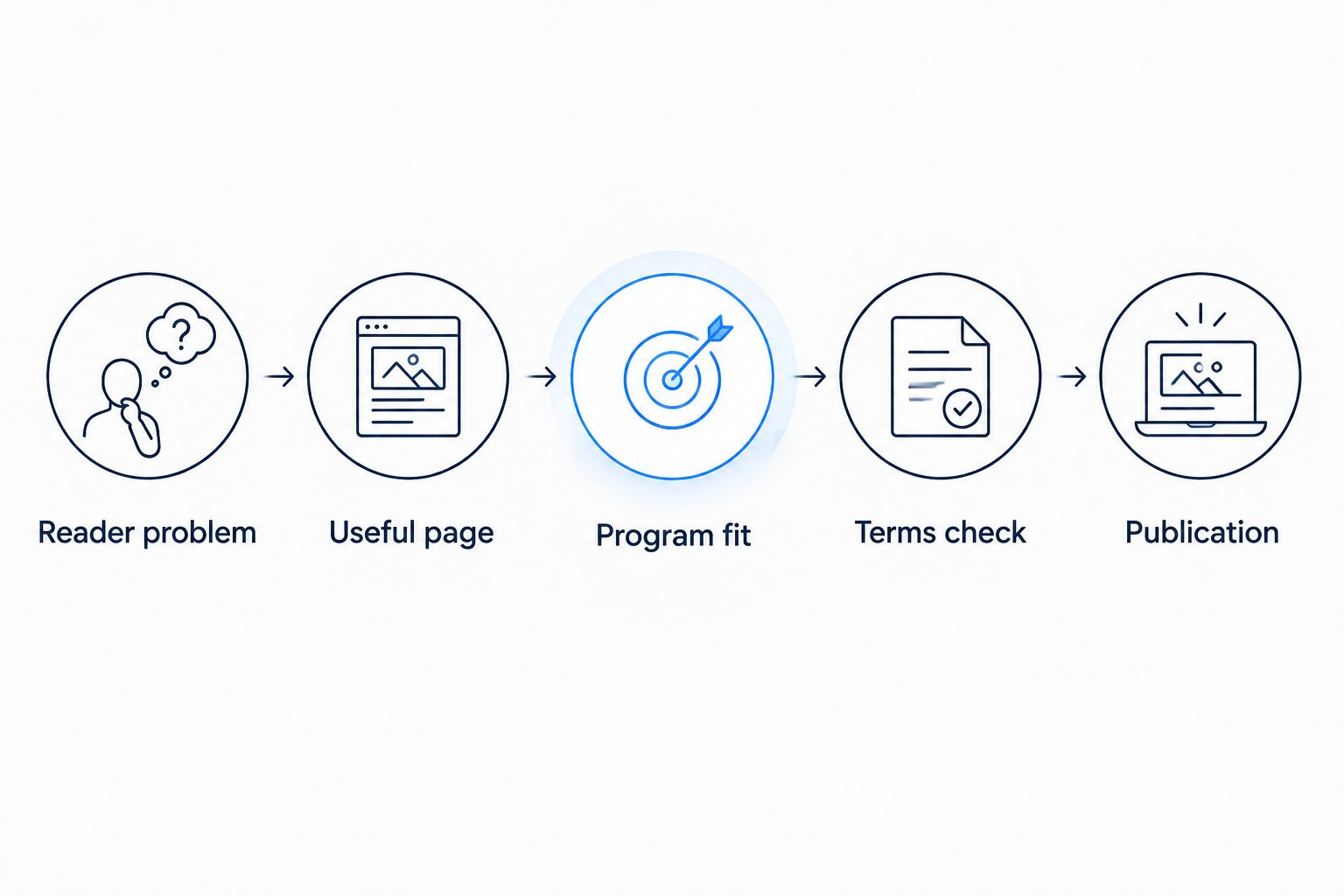
Choose the content before the account
Use this sequence to turn a shortlist into a publishing decision. These are planning limits, not earnings benchmarks.
- Reader problem: Choose 1 reader problem that ends in a real decision. Avoid a category as broad as everything someone might buy.
- Useful page: Draft 1 page that answers that problem before adding affiliate links.
- Program fit: Compare 2 relevant programs against the products or services your page actually needs.
- Terms check: Read the official rules for your channel and intended links.
- Publication: Add a clear disclosure, verify destinations, and publish the useful page.
A disclosure belongs where readers can understand the commercial relationship. For a US audience, follow the FTC's Endorsement Guides and disclosure guidance; do not assume a footer alone explains every recommendation.
Which affiliate program should you choose?
Choose Amazon Associates if your first useful page helps readers select physical products. Choose eBay Partner Network when the decision depends on used goods, collectibles, or specific listings.
Choose Awin or CJ Affiliate only after identifying relevant advertisers. Choose impact.com when a participating software or service brand belongs in a tutorial you can explain accurately.
Paidsolo's beginner affiliate marketing guidance starts with the build decision, not the account signup. Pick one useful page. The rest can wait.
FAQ
What's the best affiliate marketing program for a complete beginner?
Amazon Associates is the default recommendation here for beginners publishing physical-product buying guides. Choose a different option when your subject centers on used goods, particular advertisers, or software tutorials.
Is Amazon Associates better than eBay Partner Network?
Amazon Associates fits general physical-product guides; eBay Partner Network fits used goods and collectibles. Choose according to the buying decision your article explains, not the marketplace name alone.
Are Awin, CJ Affiliate, and impact.com individual affiliate programs?
They connect publishers or partners with participating brands rather than representing a single retailer's offer. Evaluate each advertiser relationship separately, including its acceptance requirements and commercial terms.
Can I start affiliate marketing without a website?
Some programs accept promotional channels other than websites, but eligibility depends on the program. Check the official requirements for your intended channel before applying or publishing links.
Should I join several affiliate programs at once?
Start with the programs your first useful page actually needs. Additional accounts add terms, links, and reporting to manage without automatically improving the recommendation.
Do I need to disclose affiliate links?
Disclose the commercial relationship clearly where readers encounter your recommendation. For US audiences, follow the FTC's Endorsement Guides and disclosure guidance rather than relying on an unexplained footer link.
What should I check before applying in 2026?
Check channel eligibility, qualifying actions, attribution rules, exclusions, payout requirements, and disclosure obligations. Use the official program documentation and the individual advertiser agreement as your sources.
One last thing
Your best recommendation does not have to carry an affiliate link. Keep a relevant non-affiliate option when it helps the reader make a better decision.
Before publishing, remove the links and reread the page. If the advice stops being useful without them, fix the article before adding them back.